Test Footer 1

Showing posts with label Phone. Show all posts

Saturday, April 2, 2016

OnePlus Introduction

From zero to flagship killer in less than 6 months. That's the life story of OnePlus Tech - a big chunk of which went in explanation mode. First it was their relation to Oppo, then the reasons why their debut smartphone got delayed - over and over. Social media hype and an elaborate invite system sent demand soaring through the roof and it's only now that OnePlus finally looks capable of catching up on pre-orders. It's time too for the full review to take off.
If Oppo wasn't clue enough, the OnePlus One isn't exactly trying to hide its resemblance to the Oppo Find 7 pair, particularly the 7a. The One looks like a chip off the not-so-old block with similarities running more than skin-deep. For starters, the displays have the same size and resolution (Find 7a), there's 3GB of RAM, 5MP front cams and 13MP main camera with UHD video.

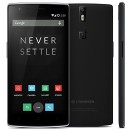
OnePlus One official photos
Aside from the shared DNA with Oppo's Find series, the OnePlus One promises a Nexus feel and performance while beating the Nexus price. If it sounds like we're drunk, you don't know the OnePlus One. It costs just $350/€300 for the 64 gig version and it comes with top notch hardware to match the ample storage. The flipside is it's still quite hard to get.
OnePlus wants you to Never Settle and the One resonates with that - it doesn't skimp on hardware to offer the very best money can buy. The screen is big, bright and high-res, the chipset is top-notch, the camera is capable and even offers cinematic DCI 4k video, the battery and storage sound more than adequate and, to top it off, it comes with pure Android on steroids in the shape of CyanogenMod 11s. The 3GB of RAM will be cheered by heavy multitaskers.

Key features

  • 5.5" 16M-color 1080 x 1920px IPS LCD capacitive touchscreen of 401ppi
  • Android OS 4.4.2 KitKat CyanogenMod 11s OS
  • Quad-core 2.5GHz Krait 400 CPU, 3GB of RAM, Adreno 330 GPU; Qualcomm Snapdragon 801 chipset
  • 13MP autofocus camera, dual-LED flash
  • 2160p@30fps video, 2160p(DCI)@24fps, 1080@30fps, slow motion recording at 1080p@60fps and 720p@120fps
  • Dual speakers (not stereo)
  • 16GB and 64GB storage options
  • 3,100mAh battery
  • Active noise cancellation with a tri-mi setup
  • Aggressive pricing
  • Swappable back panels (including wooden ones)

Main disadvantages

  • Limited availability, slow to meet pre-orders, invitation-based purchasing
  • No headphones in the retail package
  • No 60fps normal speed videos (60fps videos are all slowed down)
  • No FM Radio
  • No IR port
  • Non-expandable storage (no microSD card slot)
  • The dual speaker setup is mono only
  • Sold exclusively online
So what are the downsides to an otherwise tempting package? For starters there's no FM Radio. Are we done? No. Okay. The OnePlus One is bulky and heavy to an extent that it can enter a fist fight with the Samsung Galaxy Note 3. There's no such thing as one size fits all but OnePlus has gotten a little carried away - most people like a clear line drawn between phones and phablets.
Another issue is it's so hard to get, so you may have to pay extra to jump the queue. But with a little bit of patience and big hands you might really enjoy the OnePlus One. Opening the retail box of the OnePlus One will put a grin on your face - this device is cheap but doesn't look it, nor do the other box contents. And past the boot screen, a fast, streamlined interface awaits - one that's very close to what you'll find on a Nexus phone.
The screen is big and bright and fills the front from edge to edge pushing the bezels to the brink. And if you're still not sold, one look at the video settings will dispel any doubt - the UHD option is stuff only premium devices get these days.

Oneplus OneOneplus One
OnePlus One live photos
But before we declare the OnePlus One the bargain of the year it will have more than a few points to prove. The next stop is the hardware checkup where we'll see what the One is made of, look closer at the screen and test the battery backup.

Source From: http://www.gsmarena.com
·   0
Introduction ZTE Nubia Z9

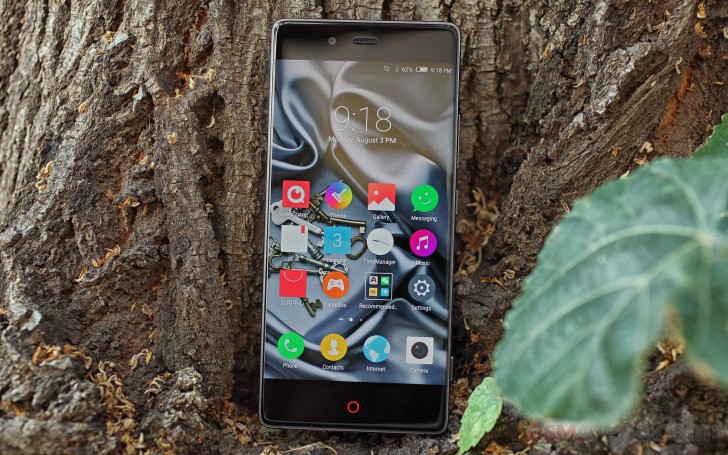
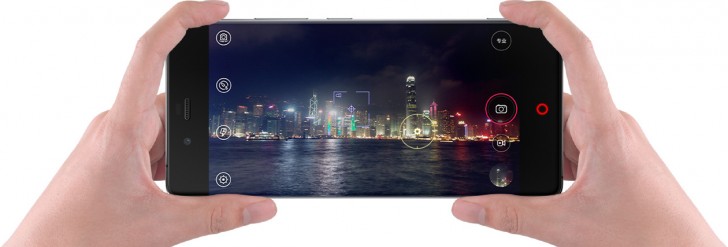
Screen bezels are an inevitable imperfection of modern smartphones. That is unless you get the ZTE Nubia Z9, the phone that magics the side bezel away. This mobile David Blaine has flagship ambitions with a design - and price! - to match.
ZTE Nubia Z9 ZTE's designers employed optical effects to hide the bezel. The chamfered 2.5D glass bends the light from the screen in a way that makes the image appear wider than the actual screen itself. That's Arc Refractive Conduction or, simply, ARC.
It's more than vanity though, the non-bezel screen lets you touch the screen glass to perform gestures - a thing called FiT (Frame Interactive Technology). What makes this system special is it ignores unintended touches, while waiting for gestures. You can squeeze the phone to unlock it, swipe to switch between apps, swipe with two finger to adjust the volume. A new, tactile way of interacting with a smartphone we've only seen in crude prototypes before at trade fairs. That alone should count for something.

Key features

  • Unique bezel-less design and a metal unibody
  • Dual Sim
  • 5.2" 1080p IPS LCD (424ppi) capacitive touchscreen
  • Qualcomm Snapdragon 810: quad-core 2GHz Cortex-A57 & quad-core 1.5GHz Cortex-A53, Adreno 430 GPU; 3GB of RAM, 4GB on the Exclusive version
  • 16MP autofocus camera with OIS, LED flash, IMX234 Exmor RS sensor f/2.0 aperture, 2160p video recording, manual mode
  • 8MP front-facing camera, IMX179 Exmor R sensor f/2.0 80° lens, 1080p video recording
  • Android OS v5.0 Lollipop with Nubia UI 3.0
  • 32GB of built-in storage, 64GB on Exclusive version
  • Fingerprint reader (Exclusive version only)
  • Cat. 6 LTE (300Mbps); Dual-band Wi-Fi a/b/g/n/ac; Bluetooth 4.0; GPS/GLONASS/BeiDou (BDS); FM radio; NFC; microUSB port with USB On-The-Go
  • Active noise cancellation with dedicated mic, AK3861 Hi-Fi music chip
  • 2,900mAh battery

Main disadvantages

  • One of the heaviest phones we've handled in a while - 192g!
  • Fairly thick too - 8.9mm
  • And yet the battery capacity is nothing special
  • No microSD card slot
  • Current software is intendent solely for China
Besides the bezel disappearing act, the Nubia Z9 boasts a metal frame sandwiched between two panes of 2.5D glass, a fast chipset and an optically-stabilized 16MP Sony camera with 2160p video recording.
ZTE Nubia Z9 That's just what you get in the Classic edition, but there's a higher tier. The Exclusive edition brings a fingerprint sensor, goes from 3GB of RAM to 4GB and doubles the storage to 64GB. The fingerprint tech is called TiO - Three in One. ZTE certainly likes its abbreviations. The brand name gave that away a long time ago. TiO refers to the phone's ability to read your fingerprint when you are pressing one of the three buttons: Power, Volume Up and Down. Unfortunately, we only have the Classic edition so we won't get to give this one a try. Sigh!
But we can't wait to walk you through what the Classic edition has on offer.

Source From: http://www.gsmarena.com
·   0
Introduction Xiaomi Mi 5

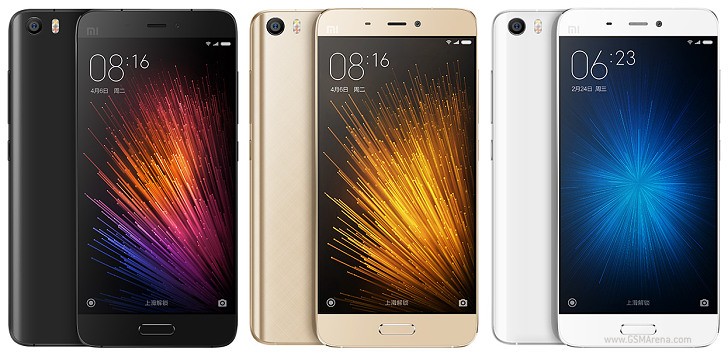
It's been a while since we met the last of the Mi kind. Even though the Xiaomi Mi 4 went on sale back in the summer of 2014, it succeeded in staying relevant for over 20 months and surpassed the lifespan of many competitors. Xiaomi surely took the time to make the Mi 5 worthy of its name. And Xiaomi Mi 5 sets the bar even higher!
The Mi 5 was the first Xiaomi phone to be unveiled under the massive spotlight of the world's biggest mobile expo - the MWC in Barcelona. And with its stunning looks and capable performance, the Mi 5 deserved nothing less.
Xiaomi Mi 5 review The Xiaomi Mi 5 is instantly likeable - the new flagship comes with unbelievably thin bezels, a sharp profile, a curved back and a lightweight body - all adding to one of the most impressive exteriors a modern smartphones can hope for.
Then you learn that inside there is the latest Snapdragon 820 chipset, a new 16MP camera with 4-axis optical stabilization and yet no camera hump, generous storage options, rich connectivity options, and a beefy battery. How about that?

Key features

  • 5.15" IPS LCD display of 1080p resolution; 428ppi; Corning Gorilla Glass 4
  • Gorilla Glass 4 (32, 64GB) or ceramic (128GB) rear panel
  • 32GB model with Snapdragon 820 chipset (2x 1.8 GHz and 2x 1.6GHz cores); 3GB RAM
  • 64GB model with Snapdragon 820 chipset (2x 2.15 GHz and 2x 1.6GHz cores); 3GB RAM - the one we're reviewing
  • 128GB model with Snapdragon 820 chipset (2x 2.15 GHz and 2x 1.6GHz cores); 4GB RAM
  • 16MP f/2.0 main camera with phase detect autofocus, 4-axis optical image stabilization, dual-tone LED flash; 2160p video at 30fps;
  • 4MP f/2.0 front-facing camera, 1080p video recording at 30fps
  • Cat.12 4G LTE (600Mbps); Dual-SIM; Wi-Fi a/b/g/n/ac; Bluetooth 4.2; NFC; GPS, GLONASS and Beidou; IR blaster
  • Android 6.0 Marshmallow with MIUI 7
  • 3,000 mAh non-removable battery, fast charging
  • Attractive pricing

Main disadvantages

  • Limited regional availability at this stage
  • No microSD expansion
  • Sealed battery
  • No FM radio
Xiaomi has turned their backs on the removable battery and memory card slot long ago and it ensures the best MIUI experience by offering uncompromised unibody design and hiccup-free memory speeds. The latter is achieved by utilizing fast UFS 2.0 storage - the same type of storage that Samsung uses on the Galaxy S6 and S7.
Xiaomi Mi 5 review The FM radio is what many people may miss, but Qualcomm stopped embedding FM hardware within its flagship chips for some time, so there is that.
Xiaomi will not be expanding the availability of the Mi 5 beyond its usual markets so availability will be scarce elsewhere and you would have to rely on grey imports to satisfy the demand. At least, the phone's price is an amazingly good deal to begin with. Oh, and if you want even more exclusivity, there is the Xiaomi Mi 5 Ceramic flavor with 128GB storage for you.

Source From: http://www.gsmarena.com
·   0

Introduction Alcatel One Touch Hero

Alcatel found a new life with Android and has continuously improved its offerings over time. The One Touch Hero is one of the latest - a 6" phablet that throws down a price challenge to the Galaxy Note 3, with a rich feature set of its own.
Alcatel One Touch HeroAlcatel One Touch Hero
Alcatel One Touch Hero official images
The Hero has captured the essence of the Note - a large, 1080p screen, a stylus to go with it and split-screen multitasking to boost productivity. The screen is actually bigger - 6 inches - and the bezels are impressively thin.
That said, Alcatel kept its feet on the ground and went for a Cortex-A7-based MediaTek chipset. The amount of inbuilt storage is economical but expandable and there's a dual-SIM version right out of the gate. This keeps the price in check and makes the phablet suitable for emerging markets (where the lack of LTE isn't a huge deal).

Key features

  • Quad-band GSM/GPRS/EDGE support; Dual-band 3G with HSPA
  • Optional dual-SIM
  • 6" 16M-color 1080p IPS LCD capacitive touchscreen
  • Capacitive stylus
  • Android OS v4.2.2 Jelly Bean
  • Quad-core 1.5 GHz Cortex-A7 CPU, 2 GB RAM, PowerVR SGX544 GPU, MediaTek MT6589 chipset
  • Split-screen multi-tasking Dual display
  • 13 MP autofocus camera with LED flash, geo-tagging
  • 1080p video recording @ 30fps with continuous autofocus and stereo sound
  • 2 MP front-facing camera, 1080p video recording
  • 16GB (dual-SIM), 8GB (single-SIM)
  • microSD card slot (single-SIM only)
  • microUSB port
  • Bluetooth v4.0
  • Wi-Fi a/b/g/n, Wi-Fi Direct and DLNA
  • GPS with A-GPS, GLONASS
  • Standard 3.5 mm audio jack
  • Stereo FM radio with RDS
  • Voice commands
  • Accelerometer and proximity sensor
  • Active noise cancellation with dedicated mic
  • Non-replaceable 3,400mAh Li-Ion battery
  • Cool active accessories

Main disadvantages

  • Capacitive stylus not as good as the Wacom solution
  • 13MP camera not on par with other 13MP shooters
  • Non-replaceable battery
  • Midrange chipset
  • Limited storage on the dual-SIM version
  • No LTE
There's a place for the Alcatel One Touch Hero in established markets too - we're seeing a shift towards affordable, capable devices in the mobile world with devices like the Moto G and $200 tablets.
Alcatel One Touch HeroAlcatel One Touch HeroAlcatel One Touch HeroAlcatel One Touch Hero
Alcatel One Touch Hero in our office
The One Touch Hero has the build quality wouldn't be out of place in the lineup of better known makers and Alcatel did well to avoid gimmicky tweaks. Where the company stepped outside the box is the attachable accessories, while split-screen multitasking and especially the stylus are right out of the Note rulebook.

Source From: http://www.gsmarena.com
·   0

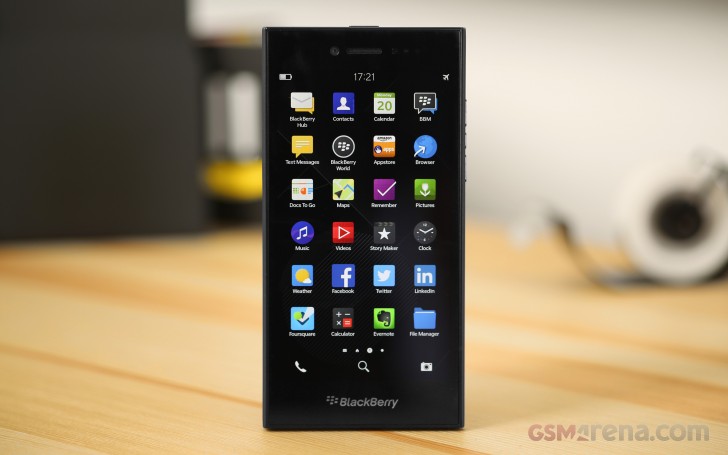
Introduction BlackBerry Leap

Many thought the days of BlackBerry were numbered yet the company is still here, pushing new phones. The Canadians might not be the leading smartphone manufacturer that it once was, but it's still got a loyal fanbase that the BlackBerry Leap comes to cater to.


You get a 5" HD display, dual-core processor, 2GB RAM, an 8MP shooter and a rich connectivity package - not the kind of specs to make a geek's pulse race, but adequate for the mid-range that the Leap is targeting. The design is instantly recognizable - square edges, plastic unibody and dotted rear panel with a huge BlackBerry logo. It's more of the classic kind, rather than modern or fresh, but that's a good thing to say for a business-oriented phone.

Key features

  • 5" 720p LCD capacitive touchscreen, 294ppi
  • Dual-core 1.5GHz Krait CPU, 2GB of RAM, Adreno 225 GPU; Snapdragon S4 Plus chipset
  • 8MP autofocus camera, single-LED flash; HDR, Panorama
  • 1080@30fps video recording
  • 2MP front camera, 720p video recording
  • 16GB of built-in storage, expandable via a microSD slot
  • Cat. 3 LTE (100/50Mbps); Wi-Fi b/g/n; Bluetooth 4.0; GPS with A-GPS; FM; microUSB
  • 2,800mAh battery
  • BlackBerry OS 10.3.1 with native Android app support (4.3 Jelly Bean API)

Main disadvantages

  • BlackBerry OS 10 not quite as functional as major rivals
  • Processor is decidedly underpowered
  • Non-IPS screen
  • No NFC
  • Non-removable battery
The BlackBerry Leap is hardly a hero device set to lift the profile of the company - instead it's a workhorse that should bring in some extra sales and help keep the maker afloat until it figures out its next strategic move. And on paper it looks capable of handling the task.
Blackberry LeapBlackberry LeapBlackberry LeapBlackberry LeapBlackberry Leap
BlackBerry Leap official pictures
Of course we shouldn't forget that competition in the mid-range has never been this fierce. What was once a land of underperforming handsets trying to replicate flagships designs with cheaper materials and often failing spectacularly now hosts a bunch of very solid smartphones that can cater to the needs of many a power user. The Leap needs to convince us it's got what it takes to compete there, offering enough standout features to attract attention and a well-balanced experience to make customers reach for their wallets.
Let's see how this one goes - we start with the unboxing and hardware inspection after the break.

Source From: http://www.gsmarena.com
·   0

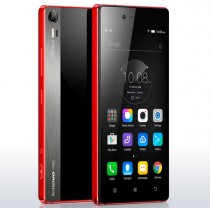
Introduction Lenovo Vibe Shot

The Vibe series often breathes fresh air into the stale smartphone design segment and the Lenovo Vibe Shot wants to serve double duty by trying to break into the difficult high-end smartphone photography market as well.
We still fondly remember the Vibe X2 design and while the Vibe Shot is different, we think we'll remember it for a while too. It features a metal strip on the back to hold the camera and all its friends, which makes it look more like a compact camera than a smartphone.
Lenovo Vibe Shot review The camera is indeed the main focus of the feature sheet. It has a 16:9 BSI sensor with 16MP resolution and optical image stabilization. It's augmented by a triple-LED flash and laser autofocus. You get a couple of hardware controls too - a two-stage shutter key, an Auto/Pro mode switch, the volume rocker turns into a zoom control to boot.
The Vibe Shot design is based on the aluminum frame and glass sandwich that rules the Android high class, but the camera strip on the back really breaks up the monotony. We especially like the Carmine Red version, which paints the metal frame in sports car red.
Despite its premium design, this Lenovo is a mid-ranger at heart. Its 1080p screen and Snapdragon 615 chipset put it in the same mid-premium segment that the HTC One A9, Moto X Play and others occupy.

Lenovo Vibe Shot key features

  • Aluminum frame with Gorilla Glass 3 on the front and back
  • Dual-SIM dual-standby capability
  • 5" 1080p IPS LCD capacitive touchscreen, 441ppi
  • Octa-core Cortex-A53 CPU (4x 1.7GHz plus 4x 1.0GHz), 3GB of RAM, Adreno 405 GPU; Qualcomm Snapdragon 615 chipset
  • 32GB of built-in storage; microSD card slot (up to 128GB)
  • Android 5.1.1 Lollipop
  • 16MP laser autofocus camera, triple-LED flash; HDR, Pro mode, Panorama
  • 1080@30fps video
  • 8MP front camera, 1080p video recording; wide selfie
  • Cat. 4 LTE (150/50Mbps); dual-band Wi-Fi a/b/g/n, hotspot, Wi-Fi direct; Bluetooth 4.1 LE; GPS/GLONASS; microUSB
  • 3,000mAh Li-Po battery capacity
  • 3.5mm headphone jack, active noise cancellation with a dedicated mic

Main disadvantages

  • No 4K video capture
  • Midrange chipset in a pricy handset
  • No fingerprint sensor
  • No NFC
This mid-premium segment came to be mainly because people want a device that looks and feels premium, but the new features each year's flagships bring have become even more far-fetched. Will you ever use those features? Perhaps, perhaps not.
That's not to say the Lenovo Vibe Shot doesn't have premium features. The camera comes fully-loaded for photos (not so much for videos), the storage is fairly generous (the competition comes with 16GB as base or no microSD slot) and we were wowed by the screen as soon as we powered it on. It's just that the gimmicks are out (and some genuinely useful functionality along with them, unfortunately).
Lenovo Vibe Shot official images - Lenovo Vibe Shot reviewLenovo Vibe Shot official images - Lenovo Vibe Shot reviewLenovo Vibe Shot official images - Lenovo Vibe Shot review
Lenovo Vibe Shot official images
Here's the deal with Lenovo phones - their popularity is quite regional. Either you've never seen one or they are quite popular where you live. Can this one spur a more global adoption? Or at least further raise the popularity of Lenovo handsets? Let's crack open the box and find out.

Source From: http://www.gsmarena.com
·   0

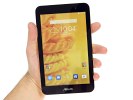
Introduction Asus Memo Pad 7 ME176C


Of all the emerging Asian smart device manufacturers, Asus has easily one of the most diverse portfolios of devices around. From PadFone to Fonepad to Transformer Pad, the Taiwanese manufacturer provides a tablet for every market segment and user, with a new one popping up virtually every month. And the company's growing Memo Pad family is no exception.
The Asus Memo Pad 7 has so many iterations, in fact, that it's necessary to specify that we're reviewing the ME176C model, specifically. The ME176C is the lesser member of the new line of Memo Pads introduced by Asus last month. It features the same screen as the older Memo Pad HD7, but runs on Intel's Atom Z3745 chip rather a Mediatek one, and that should provide a huge performance boost.
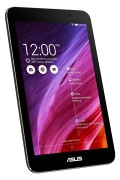
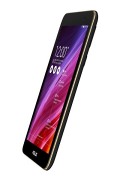
Asus Memo Pad 7 ME176CAsus Memo Pad 7 ME176CAsus Memo Pad 7 ME176CAsus Memo Pad 7 ME176C
Asus Memo Pad 7 ME176C
The ME176C has also been updated to the latest Android build, sporting version 4.4.2 KitKat, with tons customizable extras from Asus. Like its predecessor, this Memo Pad 7 is firmly in the entry-level price point, with a WXGA screen, 8/16GB of internal storage, 1GB RAM, and a 5MP/2MP rear/front camera combo.
Let's take a closer look at what else the Memo Pad 7 ME176C brings to the table:

Key features

  • 7" 800 x 1280 IPS LCD of 216ppi
  • Intel Atom Z3745 chipset, 1GB of RAM
  • Quad-core 1.86GHz processor
  • Intel HD GPU based on Ivy Bridge
  • Android 4.4.2 with Asus customizations
  • 5MP back and 2MP front cameras
  • microSD card support up to 64GB
  • 3,910mAh battery
  • Multiple color options
  • Competitive price

Main disadvantages

  • No cellular version
  • Plastic build
  • Low-res screen
While for the most part the specs sheet doesn't seem like anything worth writing home about, one thing that does jump out is the Intel Atom Z3745 processor. Based on Intel's Bay Trail-T 22nm architecture, the Z3745 is the same processor found on full-fledged Windows hybrid laptops like the Acer Aspire Switch 10. We're excited to see what kind of performance the ME175C will be able to achieve on this low-res droid even if it only has 1GB of RAM.
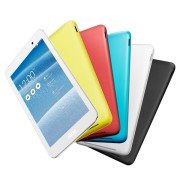
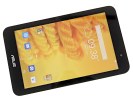
Asus Memo Pad 7 ME176CAsus Memo Pad 7 ME176CAsus Memo Pad 7 ME176C
The Asus Memo Pad 7 ME176C in our studio
As you can tell by our own photos, one thing that jumps out from a design standpoint is the vibrant color combinations. Our own bright yellow is complemented by equally eye-catching Red and Blue colors, besides the traditional Black and White options.
We'll be getting our review underway starting with our detailed look at the hardware and design strategy on the next page.


Source From: http://www.gsmarena.com
·   0

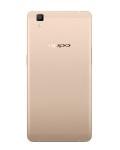
Introduction Oppo R7s

There was a Plus, there was a Lite, and now there's an S - the Oppo R7s. Next in Oppo's line of premium built mid-rangers, the R7s borrows both the looks and the substance, and brings the so-far-missing 5.5-inch-screen phone size to bridge the distance between the R7 and the R7 Plus.
You'd have to be a true Oppo connoisseur to tell the R7s apart from its brethren, and that's more of a good thing, really. The R7s has the same sleek metal unibody, the gentle arcs towards its display edges, the exquisite fit and finish - an overall aura of superiority.

 Oppo R7s review
Beneath the surface little has changed. The only headline-worthy bump in the specsheet is the 4GB of RAM - it's still a pretty exclusive club and its members are mostly true flagships.
Aside from that, it's the tried and true Snapdragon 615 running the show, and we know how Oppo is capable of extracting the best out of it. The 13MP camera setup with phase detection autofocus is also familiar from the R7, as is the 8MP front-facer.
The increase in screen diagonal comes with a due growth of battery capacity, and you can top up the 3070mAh power pack blazing fast thanks to Oppo's home-engineered VOOC charging.

Oppo R7s key features

  • Magnesium-aluminum alloy unibody construction
  • Dual-SIM dual-standby capability
  • 5.5" 1080p AMOLED capacitive touchscreen, 401ppi, Gorilla Glass 4
  • Octa-core Cortex-A53 CPU (4x 1.5GHz plus 4x 1.21GHz), 4GB of RAM, Adreno 405 GPU; Qualcomm Snapdragon 615 chipset
  • 32GB of built-in storage
  • ColorOS 2.1 on top of Android 5.1.1 Lollipop
  • 13MP phase detection autofocus camera, f/2.2 lens, single-LED flash; HDR, Expert, RAW, Panorama, Long exposure (up to 16s), Double exposure, 50MP UltraHD modes
  • 1080@30fps, 2x-10x speed timelapse, 1/4x speed slow motion 720x480px resolution
  • 8MP front camera, 1080p video recording
  • Cat. 4 LTE (150/50Mbps); dual-band Wi-Fi a/b/g/n/ac, hotspot, Wi-Fi direct; Bluetooth 4.0; GPS/GLONASS; microUSB
  • 3,070mAh battery capacity; VOOC fast charging
  • 3.5mm headphone jack, active noise cancellation with a dedicated mic

Main disadvantages

  • Midrange chipset in a premium price handset
  • Sealed battery, microSD slot shared with second SIM
  • No NFC or FM radio
  • No fingerprint sensor
  • Pricey
If you were to check back on the R7 Plus' review, you'd notice that we've listed the same disadvantages, with the lack of a fingerprint sensor the only addition here. Some of them are clashes of concepts - the gorgeous unibody and fast charging tech come at the expense of a non-removable battery. The chosen chip has reserved the R7s in the midrange, so Oppo has headroom for its proper flagship from the Find series, and the less than affordable price is par for the course in the R7 lineup.
Press images - Oppo R7s reviewPress images - Oppo R7s reviewPress images - Oppo R7s reviewPress images - Oppo R7s review
Press images
Now, it's a whole different matter why Oppo keeps omitting the NFC antenna and the FM radio receiver. It's also odd to skip on a fingerprint reader - they are becoming mainstream in the midrange, the Plus has one, and the R7s is large enough for it to make perfect sense on the back.
Whatever the reasoning, it is what it is. We'll examine the Oppo R7s starting on the next page with unboxing and hardware overview.


Source From: http://www.gsmarena.com
·   0

Introduction of Huawei Mate 8

Huawei Mate 8 time-saver review
The Huawei Mate 8 is the latest phablet by the Chinese phone manufacturer. It's a premium device all around and it surely doesn't come cheap. But for the price you pay for it, you are certainly treated to an excellent user experience and some of the best specs in the industry.

Following in the footsteps of the Mate7, the new phablet is also one seriously good-looking smartphone. It's like a tuxedo in a world of jeans and sweaters. It clearly means business.

Design and build quality

The Mate 8 has an unmatched high-end vibe, thanks to precision-machined metal and glass components, and sharper, bolder edges.
The Huawei Mate 8 is very compact for a 6-inch smartphone. It is, in fact, 4.2mm shorter than the 5.7-inch Huawei-made Nexus 6P, and a millimeter shorter than the iPhone 6s Plus, which only has a 5.5-inch display.

Weight: 185g What's this?

Thickness 7.9mm What's this?
The Mate 8 features an aluminum unibody, well befitting its flagship status (and price, too). The back has been sandblasted for a fine satin finish. However it's not removable and you have no access to the battery.
Huawei Mate 8 time-saver review The Mate 8 comes with what has become known as a hybrid DualSIM/microSD card slot. What it means is that there are two card slots on the phone - the first one is for your main SIM card and it can connect to LTE networks. The second slot however can either be used as a secondary SIM slot (2G-only) or for a microSD card. Depending on your needs, this can be a good or bad thing.
One of the best aspects of the Mate 8 is its fingerprint sensor on the back. It's is one the best implementations on the market, always on, blazing fast, and rarely erring. The sensor is always on, and it will unlock the smartphone and take you to the homescreen in what can be described only as a 'mere instant'. You can also set it up to take photos, answer calls or turn off your alarm.


Source From: http://www.gsmarena.com
·   0

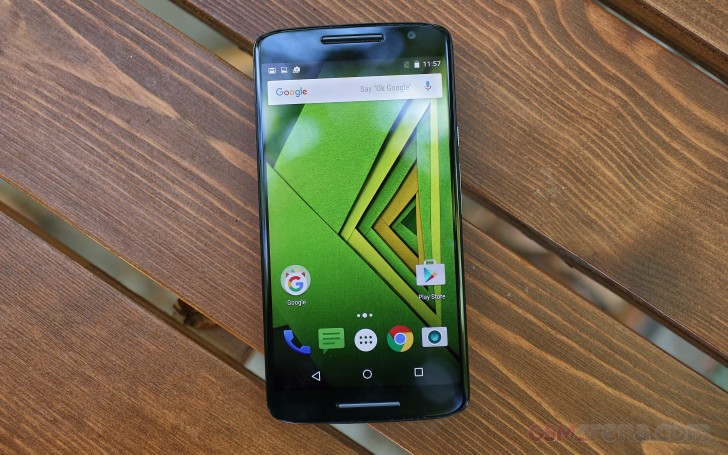
The Motorola Moto X Play Showing

Motorola Moto X Play time-saver review
In many ways, the Moto X play is a sort of middle ground, a half-step between the Moto G and the Moto X, but with a clear-cut stride towards the higher end of the scale.
An even more accurate way of describing the handset would be as a budget alternative to the Moto X Style, than anything else. At 5.5 inches, it is the ideal vanilla Android phablet, if you want a straight-forward experience, minus a few 2016 bells and whistles.

A mid-ranger on paper, thanks to its clean Android approach, the Motorola Moto X Play definitely punches above its weight and promises a real premium treat, without breaking the bank.

Design and build quality

The Moto X Play takes a definitively traditional approach to design and materials. It is plastic all around, but unlike many other mid-rangers, which endeavor to conceal their identity and imitate a glass or metal finish, the Moto X Play, proudly displays its rounded plastic frame, detachable back ant glossy front panel, all clearly distinguishable - traditional or outdated, you be the judge.

Weight: 169g What's this?

Thickness: 10.9 mm What's this?
The Moto X play is also a fairly sizable device. It measures 148 x 75 x 10.9mm, which makes it one of the thickest smartphones of late. However, its economical curves, grippy shapes and balanced weight distribution make for one truly comfortable device to hold, despite its chubby appearance.
Motorola Moto X Play time-saver review In keeping with the design, controls are pretty standard as well, almost formalist. The left side is empty and the volume rockers and power are the only buttons on the right. The SIM slot is on the top of the device, which is odd, considering the back plate is, in fact removable. While good for quick customization, the latter does allow of water and dust to penetrate closer to the battery. Still, that shouldn't be a problem, as Motorola have certified the device as having a water-repellent nano-coating (IP52 certified ).

Source From: http://www.gsmarena.com
·   0

New Design Samsung S7


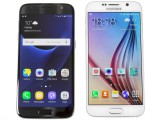
The Galaxy S6 was Samsung's plunge into premium materials for its flagship line, which had long since suffered ridicule for its extensive use of plastic. The Galaxy S7 is the evolutionary upgrade that follows, building upon the S6's foundations.

Design has been refined, with clues taken from the Note5 which split in half the year between the two S-models' releases. Under the hood, the latest silicon churns higher numbers, but the headlines are in other areas - a brand new dual-pixel 12MP camera, the return of environmental sealing and microSD expansion, plus an extra-large battery. In other words - the Galaxy S6, only better.

Design and build quality

Galaxies were all made of plastic, Samsung S-series flagships, that is. Then came the Galaxy S6, Samsung's response to plastic-hating users and reviewers, and it brought materials, look and feel up to the standard required in the segment. Samsung committed to the dual-glass design and on the S7 we see it taken a step up.

Weight: 152g What's this?

Thickness 7.9mm What's this?
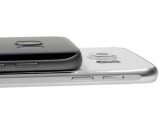
The Galaxy Note5 has generously loaned its curved back to the S7, alongside with its outer aluminum frame. This has made the S7 feel quite a lot slimmer than it actually is - measuring 142.4 x 69.6 x 7.9mm, the new model is 1.1mm thicker than the outgoing S6.
The "huge" difference, however, brings more good than it does harm. An extra millimeter means extra juice (3,000mAh battery vs. the S6's 2,550mAh), and it also helps make the camera hump less of an eye-sore - it only sticks out by 0.46mm now. There's no hiding the added heft - at 152g the S7 is precisely 10% heaver than the S6, and it shows in side-by-side comparisons. Not really an issue in daily use, though.
There's also no escaping the fact that glass collects fingerprints, and the S7 is a pain to keep clean. That's less of an issue with white paint jobs, but in all other cases, it's likely to be covered in smudges most of the time.
While the rear comes from the Note5, the front is entirely S7's. The side edges of the glass fade out nicely towards the frame at a more gradual angle than the top and bottom - a different take on the 2.5D glass concept, and one that detail freaks will rave about. It's not the S7 edge's curves, no, but the S7's face does indeed have a character of its own.
Those minute differences aside, the Galaxy S7 shares a lot of the hallmark properties of the range. Controls are where they're supposed to be, there's a fingerprint sensor inside the Home button, which requires a press to wake up, ports are where they were last time.
Well, the IR blaster is nowhere to be found, but then the card tray will now accept a microSD card beside the nanoSIM - yes, Samsung reintroduces expandable storage, which it mercilessly took away last generation.
Oh, and in case the rain drops on the photos weren't enough of a hint - the Galaxy S7 is IP68 certified for water resistance up to 1.5m deep for up to half an hour, and it's also dust tight.

Source From: http://www.gsmarena.com
·   0

Smart Phone Acer Liquid Jade Primo

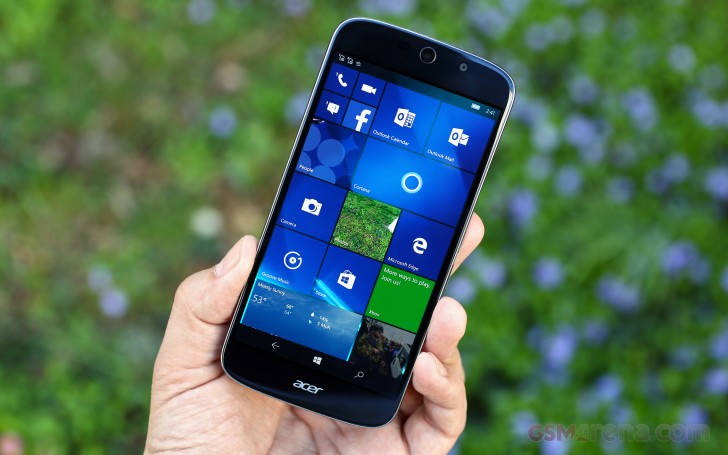
Acer Liquid Jade Primo review
The Acer Liquid Jade Primo is a flagship-grade device, up there with Microsoft's own Lumia 950. And just like Microsoft took its time with coming up with a smartphone (okay, two) to fly the Windows 10 banner, Acer has been in no rush to release the Jade Primo - announced at last year's IFA in September, it's yet to make it to the shelves but yes, we've got one early. This might explain why the Primo uses last year's Snapdragon 808 as opposed to the more current Snapdragon 820. Have no worries, Windows 10 has been known to cruise on even Snapdragon 2xx, so we expect nothing but a smooth sailing.
The Liquid Jade Primo comes with an 5.5-inch AMOLED screen - arguably the best display tech for the Windows black backgrounds. Unlike the high-end Lumias, resolution has been kept at a conservative 1080p, for better or worse.
You do get Windows Continuum, a properly-equipped 21MP camera with 4K video, an 8MP front shooter (boo, 5MP Lumias!), Wi-Fi ac, USB Type-C connectivity - pretty much everything but the kitchen sink. Okay, unless you want to swap batteries and unlock with a fingerprint reader - those particular features are a no-go.

Acer Liquid Jade Primo key features

  • Windows 10 Mobile with Continuum support (requires the Acer D01 dock)
  • 5.5" Full HD AMOLED display with 401ppi; Gorilla Glass 3
  • Snapdragon 808: hexa-core processor with 2x 1.82GHz Cortex-A57 and 4x 1.44GHz Cortex -A53, Adreno 418 GPU, 3GB of RAM
  • 32GB of built-in storage; expandable via a microSD slot
  • 21MP primary camera with f/2.2 aperture, dual-LED flash; 2160p video recording @30 fps, 1080p video recording @ 30 fps
  • 8MP front-facing camera with f/2.2 aperture, 1080p@30fps video recording
  • Cat. 6 LTE (300/50Mbps); Dual SIM; Wi-Fi a/b/g/n/ac; Bluetooth 4.0; GPS; USB Type-C port
  • Active noise cancellation via dedicated mic
  • 2,800mAh battery

Main disadvantages

  • Rather expensive
  • No Glance screen
  • Non-removable bttery, no fast charging either
  • No fingerprint reader or iris recognition
  • No FM radio
Plenty of affordable midrange Android smartphones come with a fingerprint scanner, but we're yet to see one on a Windows device, so we're not going to hold a grudge with the Jade Primo on this one. Battery capacity raises eyebrows though, even more so when the Lumia 950 did rather poorly with more juice - we'll see whether Acer will be able to pull off a miracle.
Acer Liquid Jade Primo press images - Acer Liquid Jade Primo reviewAcer Liquid Jade Primo press images - Acer Liquid Jade Primo reviewAcer Liquid Jade Primo press images - Acer Liquid Jade Primo reviewAcer Liquid Jade Primo press images - Acer Liquid Jade Primo review
Acer Liquid Jade Primo press images
Nevertheless, you're not terribly spoiled for options in the higher-end of the Windows Mobile spectrum, and that might help you look past some (or all) of the Jade Primo's shortcomings. Joins us on the following pages to see where they hide.

Source From: http://www.gsmarena.com
·   0